Deviated Septum Surgery in NYC & New Jersey
A deviated septum can make every breath through your nose feel harder than it should. Constant congestion, one-sided blockage, snoring, and frequent sinus infections are all common issues for patients with a crooked or off-center septum. Deviated septum surgery, also known as septoplasty, with Dr. Monica Tadros is designed to straighten the septum, improve airflow, and help you breathe more comfortably whether you're at home, at work, or moving through the city.
At our New York City and Englewood offices, Dr. Tadros evaluates how your septum, turbinates, and sinuses are working together. If rinses, nasal sprays, and medications haven't provided lasting relief, septoplasty may be a safe, effective option to improve your nasal breathing and overall comfort.
New York City Deviated Septum Specialist
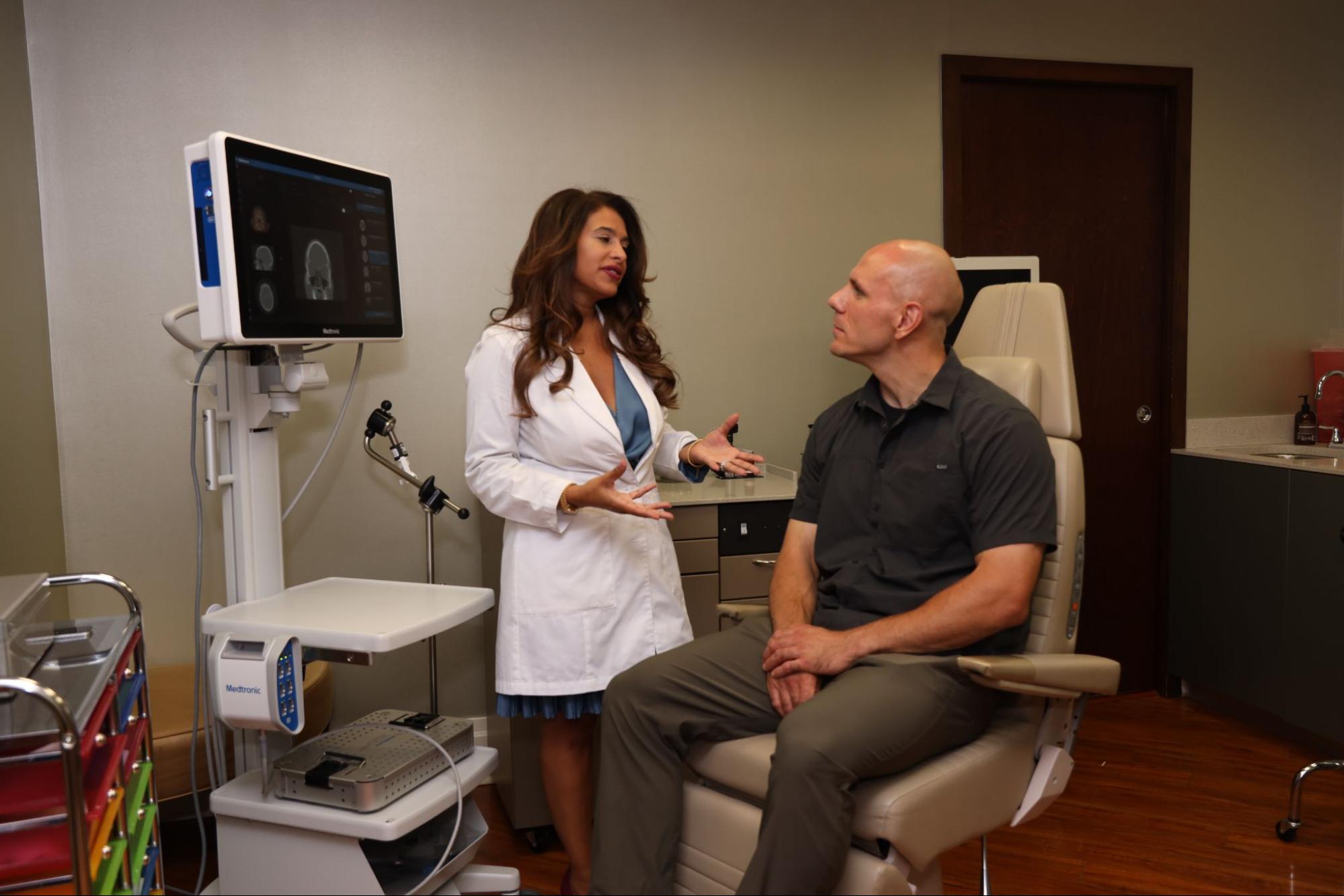
As a deviated septum specialist serving New York City and Bergen County, Dr. Monica Tadros takes a careful, step-by-step approach to diagnosis. She will examine the inside of your nose, talk with you about your breathing and sinus symptoms, and may recommend imaging or nasal endoscopy to see how significantly the septum is deviated and how much it is affecting airflow.
Not everyone with a deviated septum needs surgery, so the main goal of your evaluation is to determine whether your crooked septum is actually responsible for your symptoms. During your visit, you'll have time to discuss how long you've been dealing with nasal blockage, which side feels more obstructed, what treatments you've already tried, and what you hope to change. If deviated septum surgery is recommended, you'll understand exactly why and how it is expected to help.
Before and After Deviated Septum Surgery
Before deviated septum surgery, many patients describe feeling blocked on one side of the nose most of the time, needing to mouth-breathe at night, or never feeling like both nostrils are fully open. You might snore, wake up with a dry mouth, have trouble exercising comfortably, or experience frequent sinus infections and headaches because air cannot move freely through the nasal passages.
After deviated septum surgery, most patients notice that airflow through the nose becomes more open and balanced as healing progresses. Breathing during the day, working out, and sleeping at night often feel easier and more natural. While results can vary from person to person, the goal of septoplasty is a clearer, more functional nasal airway that supports better breathing and fewer sinus-related problems over the long term. Follow-up visits with Dr. Monica Tadros allow her to track your healing and confirm that your breathing continues to improve.
What to Expect With Deviated Septum Surgery
Deviated septum surgery is typically performed as an outpatient procedure under anesthesia, meaning you go home the same day. The surgery is done through small incisions inside the nose, so there are no visible external scars. During septoplasty, Dr. Tadros repositions and reshapes the septum, removing or adjusting only the portions necessary to create a straighter, more open airway while preserving the nose's support and structure.
After surgery, you can expect nasal congestion, a stuffy sensation, and mild bleeding for several days. Some pressure or discomfort is normal, but it is usually manageable with medication. You'll receive clear instructions on how to care for your nose at home, including saline rinses, how to sleep, which activities to avoid, and what to watch for as you heal. Most patients are able to return to light, non-strenuous work in about a week, with heavier exercise and lifting reintroduced gradually as recovery continues.
Why Consider Dr. Monica Tadros for Deviated Septum Surgery
Patients choose deviated septum surgery with Dr. Monica Tadros because she emphasizes function, safety, and honest expectations. She is dual board-certified in Otolaryngology-Head & Neck Surgery and Facial Plastic & Reconstructive Surgery and served as Director of Facial Plastic & Reconstructive Surgery at Columbia University Medical Center. Her primary focus is helping you breathe better and feel more comfortable in your everyday life, not just changing how your nose looks. She takes time to explain your nasal anatomy, show you how the deviated septum is affecting your symptoms, and outline the realistic benefits and limitations of surgery.
You'll find a supportive team that guides you through the entire process, from initial consultation to post-operative care. If deviated septum surgery is recommended, you can feel confident that the treatment plan is tailored to your anatomy, symptoms, and lifestyle. When cosmetic changes are also a goal, she can discuss combining septoplasty with a rhinoplasty so function and appearance are addressed together.

Deviated Septum Surgery in Manhattan and Englewood
Dr. Tadros performs deviated septum surgery at her Park Avenue office in Manhattan and her Englewood office in Bergen County, New Jersey, serving patients throughout New York City and northern New Jersey.
Call Our Office Today or Schedule an Appointment
If chronic nasal congestion, one-sided blockage, or difficulty breathing through your nose is affecting your daily life, it may be time to find out whether a deviated septum is the cause. Call our office today or request an appointment online to schedule a consultation with Dr. Monica Tadros. We'll review your history, examine your nose, and discuss whether deviated septum surgery is the right option to help you breathe more easily.
Deviated Septum Surgery FAQs
Who is a candidate for deviated septum surgery?
You may be a candidate for deviated septum surgery in NYC if you have persistent nasal obstruction, trouble breathing through one or both nostrils, snoring, or frequent sinus infections that can be traced to a crooked septum. An exam and, when appropriate, imaging help Dr. Monica Tadros determine whether septoplasty is likely to significantly improve your symptoms.
How long is recovery from deviated septum surgery?
Most patients in New York City are able to return to light, non-strenuous work within about a week of deviated septum surgery. Swelling and congestion gradually improve over several weeks, and full healing continues beyond that. Follow-up visits with Dr. Monica Tadros in NYC allow her to monitor your progress, clean the nasal passages as needed, and guide your return to normal activities.
Will deviated septum surgery change how my nose looks?
Septoplasty is primarily focused on improving breathing by correcting the internal structure of the nose. In many NYC cases, there is little or no visible change to the external appearance of the nose. If you are also interested in cosmetic changes, you can discuss additional options with Dr. Monica Tadros during your consultation so that functional and cosmetic goals can be addressed together when appropriate.
Does deviated septum surgery hurt?
Some pressure, congestion, and mild discomfort are expected after deviated septum surgery, but significant pain is not typical. Most patients in New York City manage post-operative discomfort with prescribed or over-the-counter pain medication for a short time, along with saline rinses to keep the nose comfortable as it heals.
When can I work out after deviated septum surgery?
Light walking is usually allowed soon after surgery, but more strenuous workouts, heavy lifting, and contact sports are restricted for several weeks to protect the healing nose. During your follow-up visits in NYC, Dr. Monica Tadros will provide specific guidance on when and how to safely return to different types of exercise based on your progress.
Is deviated septum surgery covered by insurance?
When deviated septum surgery is performed to improve breathing and address medical concerns rather than solely for cosmetic reasons, it is often covered by insurance. Our office can help you review your benefits and verify your coverage before scheduling deviated septum surgery with Dr. Monica Tadros.